PRF is a blood-derived material that some clinicians use alongside orthodontic treatment, but it is not a standard component of every aligner plan or a guaranteed way to finish faster. By the end, you will know how PRF is prepared, when it might be considered, what the research can and cannot prove, and which questions to ask before consenting.
Key takeaways
- PRF uses your own blood to create a fibrin-rich preparation.
- Ask how PRF would change your aligner plan, not just whether it is available.
- Research on faster tooth movement remains limited and does not guarantee shorter treatment.
- Discuss bleeding risks, medicines, and medical conditions before choosing PRF.
What PRF is and how a dentist prepares it
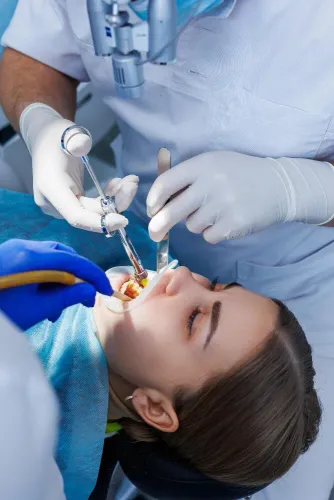
PRF is platelet-rich fibrin: a preparation made from your own blood, without an anticoagulant. A dentist draws a small blood sample and centrifuges it promptly. Spinning separates the sample into layers and concentrates platelets, white blood cells, and growth factors inside a fibrin network.
The resulting material can be shaped into a membrane or prepared as an injectable clot.
The preparation generally involves these steps:
- Blood is collected into plain tubes without anticoagulant.
- The tubes are centrifuged using a protocol selected for the intended PRF type.
- The fibrin-rich portion is separated from the red-cell layer.
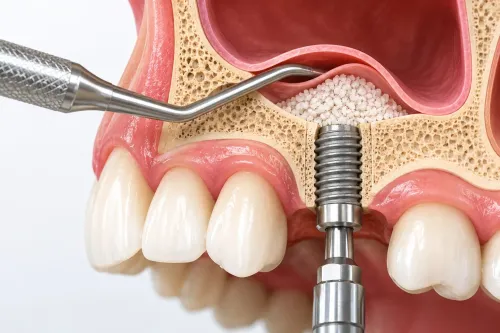
- The dentist places it at a treatment site, such as an extraction socket, graft area, periodontal site, or a location selected for an orthodontic procedure.
A search for PRF with clear aligners in Pune needs one important distinction: PRF used to support healing after surgery is not the same claim as PRF intended to influence tooth movement.
| Material | Anticoagulant | Final consistency |
|---|---|---|
| PRF | None | Fibrin-based membrane or injectable clot |
| PRP | Usually added during blood processing | More liquid platelet concentrate |
PRP remains liquid because anticoagulants delay clot formation. PRF forms a stronger fibrin matrix as it clots, allowing slower release of biologically active substances. Neither material automatically makes aligners work faster; that proposed orthodontic use remains an adjunct under study, not a guaranteed treatment benefit.
Where PRF fits into a clear-aligner plan
PRF is added to a clear-aligner plan for a defined healing or periodontal reason, not simply because trays are being used. For people considering PRF clear aligners in Pune, the key question is which problem the procedure is meant to address and how success will be measured.
1. Before aligners, PRF may be placed after a planned extraction or minor gum procedure to support soft-tissue healing. It may also accompany grafting when the treatment plan requires management of a deficient gum or bone area. This is a wound-healing indication, not proof that PRF will make teeth move faster.
2. During aligner treatment, a clinician may propose PRF near selected teeth as an optional attempt to influence local bone remodelling. The proposed mechanism involves the tissues that remove and form bone around moving teeth, but a plausible mechanism does not guarantee shorter treatment or fewer refinement trays.
3. Before adding PRF, complete a periodontal and restorative assessment. Treat active gum inflammation, cavities, poor oral hygiene, uncontrolled diabetes, and significant bone loss first; moving teeth through compromised support can worsen the prognosis.
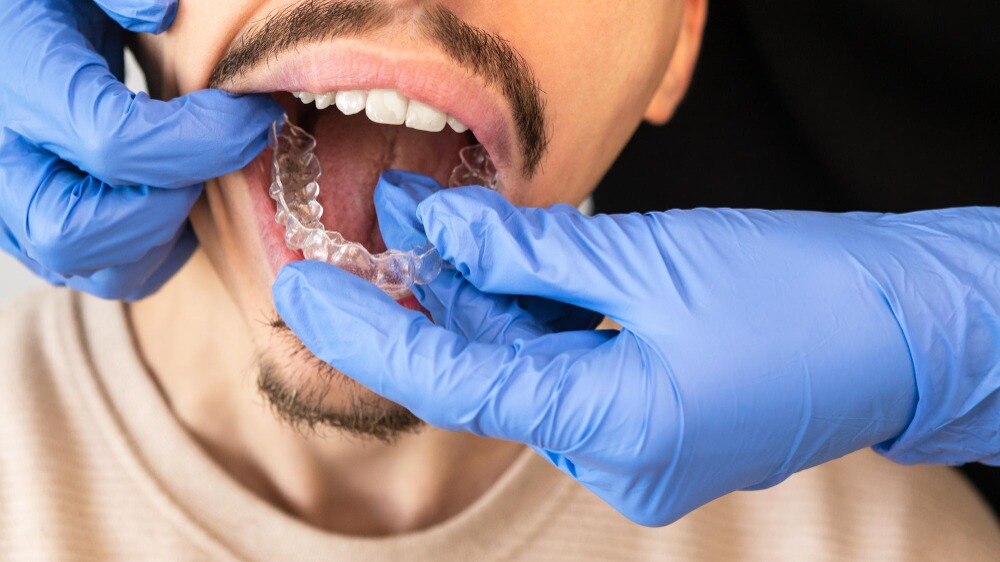
4. Keep the roles separate: aligners create the planned forces, while PRF is an adjunct for a specific biological concern. It cannot replace accurate diagnosis, attachments, interproximal reduction, elastics, prescribed tray wear, progress checks, or retainers.
For clear aligners in Pune, ask whether the proposed PRF addresses extraction healing, gum or bone management, or an experimental movement goal. A poorly fitting tray, missed review, or inadequate wear can outweigh any theoretical biological benefit.
What research says about faster tooth movement
A fixed percentage is not established. Research does not show that PRF reliably shortens clear-aligner treatment by a predictable number of weeks or months. Small clinical studies have reported faster movement in selected situations, but the findings are too inconsistent to promise that result to every patient.
| PRF use | What research supports | Practical meaning |
|---|---|---|
| PRF after extraction or grafting | Support for clot formation and soft-tissue healing | This evidence does not prove faster tooth movement |
| PRF intended to accelerate orthodontic movement | Limited, heterogeneous clinical evidence | Treat the claimed acceleration as investigational |
| Clear aligners without PRF | Tooth movement planned through staged trays and attachments | PRF is not automatically required for effective treatment |
Studies use different PRF preparations, injection or surgical techniques, teeth, follow-up periods, and definitions of “faster.” One trial might measure the rate of a canine moving into an extraction space; another might measure how quickly a tray reaches its planned position. Those outcomes cannot be treated as the same result.
Results also differ because patients remodel bone at different rates. Age, bone density, gum health, inflammation, smoking, diabetes control, oral hygiene, and how many hours you wear each tray all affect tracking. A digital setup shows the intended movement, not the biological response.
Active gum disease, untreated decay, weak bone support, or poor tray compliance can erase any proposed benefit. Evidence for prf with clear aligners in pune should therefore be discussed as an optional, measurable experiment—not a guaranteed shortcut.
Who needs caution before choosing PRF
PRF needs caution before it is added to clear aligners: the clinician must check whether your health, gums, bone, and proposed tooth movements are suitable.
Ask for these checks before agreeing to PRF:
- Review diabetes control, bleeding or platelet disorders, relevant medicines, and any condition that could affect healing or blood collection.
- Treat active gum inflammation, bleeding, periodontal pockets, untreated cavities, and poor plaque control first.
- Assess bone levels, root positions, impacted teeth, and other findings on appropriate radiographs when indicated; a scan or simulated smile cannot show everything.
- Confirm the extraction, interproximal reduction, attachment, elastic, and anchorage plan. An unsuitable plan will not be rescued by PRF.
| Factor | Check before PRF | Why it matters |
|---|---|---|
| Medical | Diabetes control, healing history, blood conditions, and medicines | Poor healing or bleeding risk can complicate treatment |
| Gum | Inflammation, pocketing, bleeding, and daily plaque removal | Moving teeth through inflamed tissue can worsen support |
| Bone | Bone height, root position, defects, and impacted teeth | Movement outside healthy bone can damage the prognosis |
| Treatment | Extraction sites, anchorage, tray tracking, and refinement plan | PRF cannot replace accurate mechanics or consistent tray wear |
For anyone searching prf clear aligners in pune, clarify the intended indication. PRF placed for extraction or graft healing is not the same as PRF proposed to influence tooth movement. Its biological rationale is plausible, but it does not prove faster treatment for your case, and PRF is not a routine aligner requirement.
How to decide whether PRF adds value in Pune
A sound decision starts with diagnosis, not a simulated smile or a promise of faster movement. Whether you consult Dr Aniruddha Wankhade or another invisible braces dentist in Pune, ask for clear answers to these questions:
1. Who will diagnose and supervise my case? Ask about the clinician’s orthodontic training, registration, review schedule, and experience managing aligner cases.
2. What problem is PRF meant to solve? It could support an extraction site, grafting, or a periodontal procedure. A research-style attempt to influence tooth movement is a different indication, so ask for the evidence and the measurable endpoint.
3. Is PRF optional? Ask what changes if you decline it, and whether the proposed benefit is supported for your specific movement rather than borrowed from wound-healing research.
4. Have you checked my gums, fillings, cavities, bone support, bite, and roots? A clinical examination and indicated radiographs matter; a scan cannot reveal every periodontal, caries, bone, impacted-tooth, or joint concern.
5. What must be treated first? Active gum inflammation, untreated decay, poor oral hygiene, uncontrolled diabetes, significant bone loss, or an unsuitable extraction plan should be addressed before elective movement.
6. What is the complete cost for clear aligners in Pune, including refinements and retainers? Also ask how often trays are reviewed and what happens if teeth stop tracking.
7. How will retention work after treatment? Without a retainer plan, aligned teeth can drift back regardless of PRF.
Related service
Clear Aligners (Invisible Braces) Clear Aligners (Invisible Braces) Clear aligners are a modern, nearly invisible alternative to traditional braces, designed to straighten teeth comfortably and effectively. View service → |
Frequently asked questions
What is PRF and how does a dentist prepare it?
PRF is made from a small sample of your blood without anticoagulant. The dentist centrifuges it promptly to separate and concentrate platelets, white blood cells, and growth factors within fibrin.
Where does PRF fit into a clear-aligner plan?
A dentist may place PRF during selected procedures or treatment stages, but it does not replace aligner planning, attachments, regular reviews, or wearing trays as instructed.
Does PRF make teeth move faster with clear aligners?
Research suggests possible benefits in some cases, but studies remain limited and do not guarantee a shorter treatment time.
Who should use caution before choosing PRF?
Discuss PRF carefully if you have bleeding or clotting disorders, take blood thinners, have significant anaemia, or have another condition affecting healing.
Keywords